
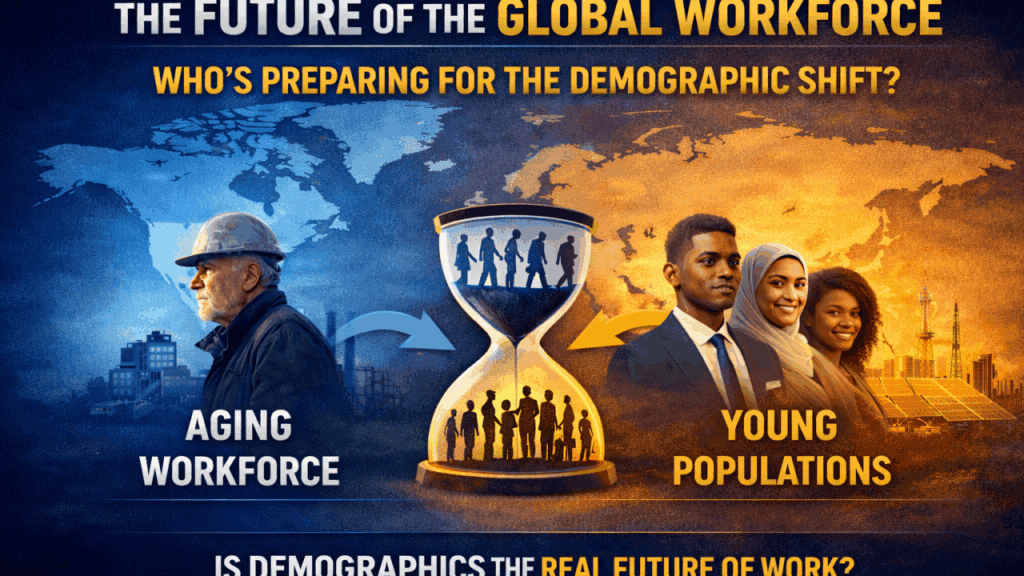
Lately it feels like everyone is talking about AI and how it will reshape the future of work, but the biggest workforce shift of the next 20 years might not be technology at all.
It’s shifting demographics.
Across much of the developed world, populations are aging rapidly. In the U.S., Europe, China, India and Japan, large portions of the workforce are approaching retirement while birth rates continue to decline. At the same time, other regions of the world, particularly parts of Africa and South Asia are becoming dramatically younger. That imbalance is going to shape the future of the workforce in ways many businesses aren’t fully preparing for yet.
For employers, this isn’t just an abstract economic trend. It will affect talent availability, immigration policy, remote work models, and where companies choose to invest and grow.
Many industries already feel the early effects. Skilled trades, healthcare, manufacturing, and logistics are all facing tightening labor markets as experienced workers retire faster than they can be replaced.
And this isn’t likely to be a short-term cycle. It’s a structural shift.
Companies that start thinking about workforce strategy through a global demographic lens will be better positioned for what’s coming. That could mean investing earlier in talent pipelines, expanding recruiting geography, partnering with education systems, or rethinking how experienced workers stay engaged later in their careers.
In many ways, the workforce challenges we’re seeing today may only be the beginning of a much larger demographic transition. The conversation around the future of work often centers on technology. But the reality is that people and the availability of them will remain the most important variable.
Understanding where the workforce is growing, where it’s shrinking, and how that affects talent pipelines will be one of the most important strategic conversations business leaders have in the coming decades.